At 12:25 UTC on November 1, 2026, USDC began leaving an OKX account tied to an unnamed EU entity; 44 minutes later, Kraken followed, and $126.04 million had moved to 17 wallets by November 2. By November 4, Crédit Mutuel Arkéa confirmed that the path into its network ran through an unnamed service provider's platform — not through customer accounts, and not, the bank insists, through Fortuneo.
In this article
Why this matters
The incident is a nine-figure fraud against a French cooperative banking group with €211.5 billion in total assets and more than 5.8 million members and customers. Its significance is not the theft alone but the trust boundary it crossed: Arkéa says attackers obtained direct access to the banking group through a supplier's platform and then used the bank's own account to transact with other banking institutions, from where funds could be converted into cryptocurrency via specialised platforms (The Record).
That distinction matters for how banks describe third-party risk. The failure was not a customer being tricked, and Arkéa explicitly rejected human error on its side, describing the event as a sophisticated external attack. The bank said its security systems identified the suspicious activity quickly and that the incident was contained, with some funds blocked and recovery efforts under way (The Record). Customer assets were unaffected, though some transfers were delayed.
For defenders, the operational lesson is narrow and uncomfortable: a provider integration can carry more than data access. If a supplier's platform can be used to originate instructions that the bank executes against its own accounts, then vendor assurance cannot stop at "no customer data exposed." The control that failed was an assumption — that third-party connectivity to payment rails could not translate into authority to move the institution's own funds.
What happened
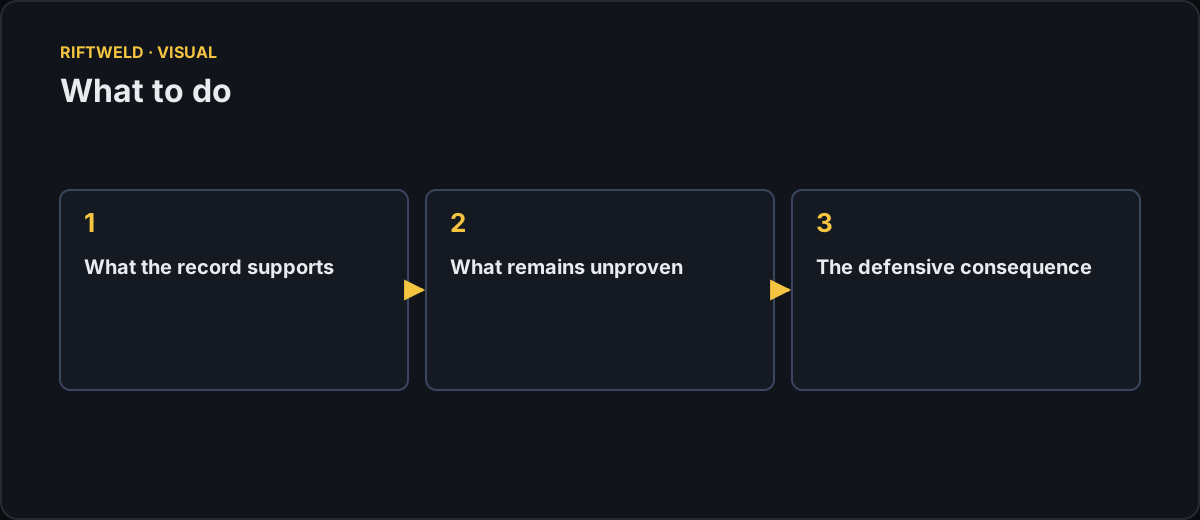
The public chronology began with blockchain investigator ZachXBT, who on November 2 flagged a suspected theft of more than $106 million from multiple centralised exchange accounts belonging to an unnamed EU entity, withdrawn as USDC and USDT stablecoins. He said he was highly confident the thief was not North Korea's Lazarus Group, based on multiple laundering indicators, and that the funds were swapped for ether, moved through instant exchanges, and partly converted to Monero (Help Net Security).
Independent on-chain analyst Bitquery traced $126.04 million in USDC leaving accounts at Kraken, Crypto.com, and OKX on November 1–2, destined for 17 wallets. By 23:10 UTC on November 1, 84% of the funds had moved on, and Tether froze $1.14 million of USDT. Kraken paid a further $17.2 million to two wallets between 15:46 and 16:30 UTC on November 2, after the first public alert (Bitquery).
On November 3, ZachXBT reported another $27 million in withdrawals by the same actor, bringing his total to $133 million, and argued that the absence of proper incident disclosure had allowed more than $30 million to be laundered that EU law enforcement might otherwise have frozen. On November 4 he named Crédit Mutuel Arkéa as the alleged victim, said the attack spanned multiple days, and suspected the true loss was larger once over-the-counter activity was counted (Help Net Security).
Arkéa's first press release, issued at 13:00 on November 4, confirmed "an attack that allowed fraudulent transactions to be carried out," said the incident was closed and under control, and told customers it had caused only a delay in certain transfers. A follow-up Q&A at 17:30 said attackers reached the bank directly through the platform of one of its service providers, used Arkéa's own account rather than customer accounts at its federations or subsidiaries, and did not enter through Fortuneo (BleepingComputer).
The Paris public prosecutor's office opened an official investigation into an "attack on an automated data processing system by an organised group," with France's anti-cybercrime police handling the case (Le Monde; Bitquery).
What the record establishes, and what it does not
| Claim | Status | Basis |
|---|---|---|
| Arkéa suffered a cyberattack enabling fraudulent transactions | Confirmed | Arkéa press release and Q&A |
| Attackers reached the bank through an unnamed service provider's platform | Company statement | Arkéa Q&A |
| The bank's own account was used; customer accounts were not accessed | Company statement | Arkéa Q&A |
| Entry through Fortuneo | Not established | Arkéa denies it; Grégory Raymond alleges it |
| Human error caused the breach | Not established | Arkéa denies it |
| $133 million / €118 million stolen | Reported | ZachXBT estimate; Arkéa validates only order of magnitude |
| $126.04 million in USDC moved to 17 wallets | Observed | Bitquery on-chain tracing |
| $1.14 million in USDT frozen by Tether | Observed | Bitquery |
| Some funds blocked, recovery under way | Company statement | Arkéa Q&A |
| Total loss exceeds the on-chain figure | Inferred | ZachXBT and Raymond cite possible OTC activity; no evidence produced |
| Attacker identity or network | Not established | No attribution in the record |
The loss figure is the central unresolved point. Arkéa's first estimate was about €100 million ($112.6 million), and when asked directly whether €118 million ($133 million) had been stolen, the bank said it did not confirm the information and could "simply validate the order of magnitude," adding that it was too early to give a final amount (AFP; Help Net Security). Le Télégramme reported the theft as more than $133 million (€118 million) and noted that the Banque de France had been notified by Arkéa (Le Télégramme).
Disputed facts and the limits of the record
Three claims remain contested or unsupported. First, the Fortuneo entry point: French journalist Grégory Raymond alleged that fraudsters initiated transfers from Fortuneo while choosing beneficiary names, sending each transfer in the exact name of an exchange account holder opened under a falsified identity so that sender-name checks would pass. Arkéa explicitly rejects this, stating that no "entry" was made through Fortuneo (Raymond on X; Help Net Security).
Second, the source of the money. Arkéa says customer accounts were not accessed and client assets face no loss, but has not publicly characterised the source account beyond "the bank's own account." Whether the funds were treasury or liquidity is therefore not established. Third, Raymond's unsourced suggestion that the network behind the attack may be franco-israeli and that total losses may be higher than the on-chain-visible $133 million, potentially including off-blockchain OTC settlements, remains an allegation without supporting evidence in the record.
The provider's identity, the mechanism by which its platform was compromised, and the definitive loss figure were all undisclosed as of the research date. The record is thin on technical detail: no vulnerability, malware, or authentication mechanism is identified in any source, and Arkéa's description of a "sophisticated attack" is not independently verifiable. The bank's warning that phishing attempts may follow, with customers urged never to share login IDs, passwords, card numbers, or SMS verification codes, is a preventive measure rather than evidence that customer data was compromised (Help Net Security).
Method and sources
This analysis draws on Arkéa's own press release and Q&A as primary statements, cross-checked against reporting from Help Net Security, BleepingComputer, The Record, AFP, Le Monde, Le Télégramme, and The Defiant, plus on-chain tracing published by Bitquery and public posts by ZachXBT and Grégory Raymond. Claims are labelled confirmed only where Arkéa or a public authority states them, reported where attributed to investigators, observed where derived from on-chain tracing, and inferred where the record supports a conclusion without direct proof. The $133 million figure is treated as an investigator estimate validated only in order of magnitude by the bank, not as a confirmed loss. No source in the record identifies the exploited provider, the specific vulnerability, or the attackers, and no attribution is asserted here.